The Four Systems We Replace Here
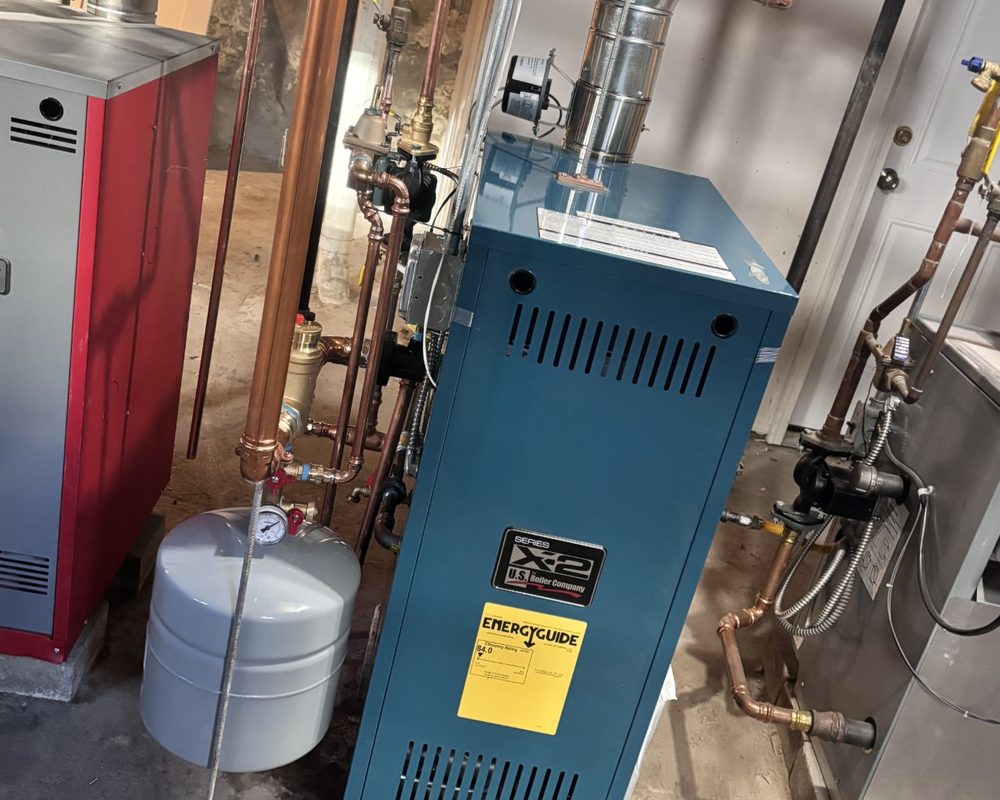
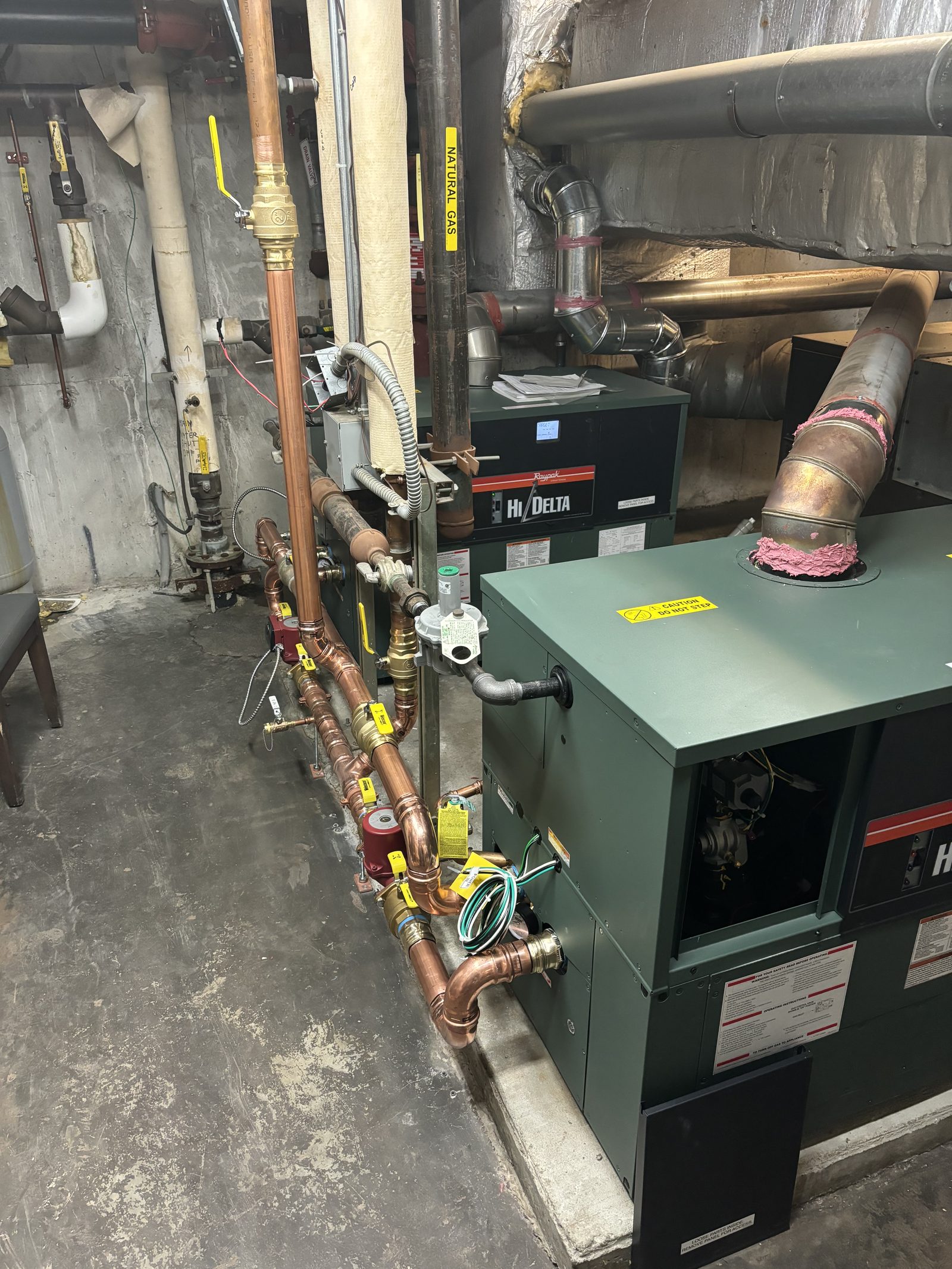
Boilers, feeding cast iron radiators or baseboard, are what most of pre-war Quincy runs on. Steam and hot water behave nothing alike and they replace differently.
Furnaces, heating air and moving it through ductwork, in the postwar housing and in parts of Wollaston, Squantum and West Quincy where ducts went in from the start.
Air conditioning, usually sharing that ductwork, sometimes on its own air handler, and in the condominium stock often not present at all until somebody adds it.
Heat pumps, ducted, heating and cooling from one piece of equipment. A real answer in some Quincy buildings and a poor one in others, and the difference is not subtle.
Plenty of buildings here are a mixture, because a century of additions leaves a boiler in the basement and a condenser bolted to the side decades later. That is normal. It just means the question has more than one part to it.
What the Quincy Housing Stock Decides
The three deckers and two families. A fifth of the city’s homes are in two to four unit buildings, and the mechanical room is usually a shared basement with one appliance per unit lined up along a wall, or one larger appliance serving all three floors. Which of those you have changes everything about a replacement: the metering, who pays for the fuel, what the chimney is carrying and whether the work can be done a unit at a time. It also changes who has to agree to it.
The pre-war single families. Cast iron radiators, hot water or steam, pipe that has been added to across decades, and a basement with a low ceiling and a bulkhead that decides what physically fits. The radiators are an asset rather than a problem. They hold heat and they work at lower water temperatures than most people expect, which makes them more flexible than they look when a system is being redesigned around them.
The condominium buildings. Close to a quarter of Quincy’s housing sits in buildings of fifty units or more, in North Quincy, Quincy Point and around Marina Bay. Thirty percent of Quincy homes heat with electricity, far above the towns around it, and that is mostly these. Equipment here is often inside the unit, in a closet, and the association’s process is part of the job rather than a formality around it.
The rentals. With 55 percent of occupied homes rented, a good share of these calls come from an owner who does not live in the building, or from a management company. Scope in writing, access arranged, tenants worked around. We are used to it.
Water, Weather and Where the Equipment Sits
Quincy’s Multi-Hazard Mitigation Plan names coastal flood exposure in Houghs Neck, Adams Shore, Germantown, Squantum and Merrymount, which is our own end of the city. Mechanical equipment in those basements has a harder life than the same equipment three streets inland, and a boiler or an air handler that has been through standing water is a different replacement conversation than one that has not. Where it makes sense we set new equipment higher, and we will say when that is worth doing.
The other Quincy constraint is simply space. Basements here are tight, low and full of pipe, and the bulkhead decides what comes in. What can be serviced afterwards matters as much as what fits on the day, and it is worth thinking about before the equipment is ordered rather than the first time somebody needs to get at it.

Permits, Licensing and the City
A permit is required before this work is installed, and in Quincy it goes through the city’s Plumbing and Gas Department, filed online. The application is made by the licensed contractor rather than by the owner. We file it, the work is inspected, and that is part of the job rather than something left for you to arrange.
A licensed master or journeyman plumber may carry on the work of a gas fitter throughout Massachusetts, so where a replacement touches the gas connection that side is ours. Patrick Casper holds Master Plumber 17118-PL-M and the company holds Plumbing Corporation 4667-PL-C, both on the licenses page against the state’s own register. Residential air conditioning and ducted heat pump systems sit below the ten ton capacity at which Massachusetts regulates refrigerant work separately.
When It Is Not Actually the End
Not every expensive fault ends a system, and in a city with this much older equipment that distinction is worth money.
A cracked heat exchanger ends a furnace and a cracked section ends a cast iron boiler, because those are the body of the appliance. Controls, circulators, valves, igniters, thermocouples, contactors and capacitors are parts, and a part gets changed. Age is context rather than a verdict: equipment well past a normal working life that has now developed a real fault is usually a replacement conversation, because fitting a part to it moves the same decision one season along.
We will tell you which of those you have. If yours is worth repairing we would rather say so, and the no heat page covers what to check first when it has stopped in the middle of a January night.
What the Visit Looks Like
We look at the building before we look at equipment: what is there, what failed, what the distribution can carry, what the basement and the electrical service will support, and who else has to agree to the work. If it is repairable, that is what we tell you.
If it needs replacing, the system is sized to the building rather than to whatever was there before, because oversized equipment short cycles, heats unevenly and wears itself out early. The price is agreed with you before work starts. The permit is filed with the city, the work is inspected, and we go through the controls with you at the end.
While we are in the basement anyway, the water heater is usually part of the same conversation, especially where it shares a flue with the appliance being replaced.
Questions We Hear
Do You Work on Three Decker Systems in Quincy?
Regularly. A fifth of the city’s housing is in two to four unit buildings and the shared basement is familiar ground. The first thing we establish is whether the building runs one appliance per unit or one serving all the floors, because that decides the metering, the chimney, the sequencing and who has to sign off. Work in an occupied three decker can usually be staged so the building is not without heat, and that is planned rather than improvised.
Can My Condominium Association Stop Me Replacing My Own Unit’s Equipment?
The association’s rules govern what happens outside your unit and often what happens to anything shared, which on this kind of work can include venting, risers, roof or wall penetrations and access. In practice most Quincy buildings have a process rather than a prohibition. We are used to providing scope in writing for a management company and working to a building’s own access rules, and it is far easier to do that at the start than after a date has been booked.
Is a Heat Pump a Good Idea in an Older Quincy House?
Sometimes genuinely yes, and sometimes not, and the honest answer depends on the specific building. Capacity falls as the outdoor temperature does, so the coldest week of a Quincy February is the hardest work the system will ever do. Insulation, air leakage, the distribution already in place and the electrical service all decide it. Some buildings suit a heat pump carrying the whole load and others are better served sharing the work with existing heating on the coldest days. If yours is not a good candidate we will say so.
My Basement Has Flooded Before. Does That Change Anything?
Yes, and it is worth raising early. The city’s own hazard plan names Houghs Neck, Adams Shore, Germantown, Squantum and Merrymount for coastal flood exposure, and equipment in those basements has a harder life. A boiler or air handler that has sat in water has had its controls, its burner and often its wiring compromised in ways that are not visible. Where it makes sense we set new equipment higher off the floor, and we will tell you when that is worth the trouble.
Do I Need a Permit To Replace a Boiler or Furnace in Quincy?
Yes, and it is filed through the city’s Plumbing and Gas Department by the licensed contractor rather than by you. The work is inspected afterwards. That is not an optional extra or a cost to be avoided: an unpermitted heating replacement is a problem at resale and a problem with an insurer, and it means nobody independent has looked at the venting.
Will You Take the Old Equipment Away?
Yes. Removal and disposal are part of the job. An old cast iron boiler in a Quincy basement is a genuine piece of work to get out, sometimes in sections and usually up a bulkhead, and that is accounted for in the price we agree rather than added afterwards.