
What a Fixture Installation Involves
The jobs we are called for most often:
- Kitchen sinks. Drop in, undermount, single or double bowl, stainless, composite, or a cast iron enameled sink that takes two people and a sheet of cardboard to move safely.
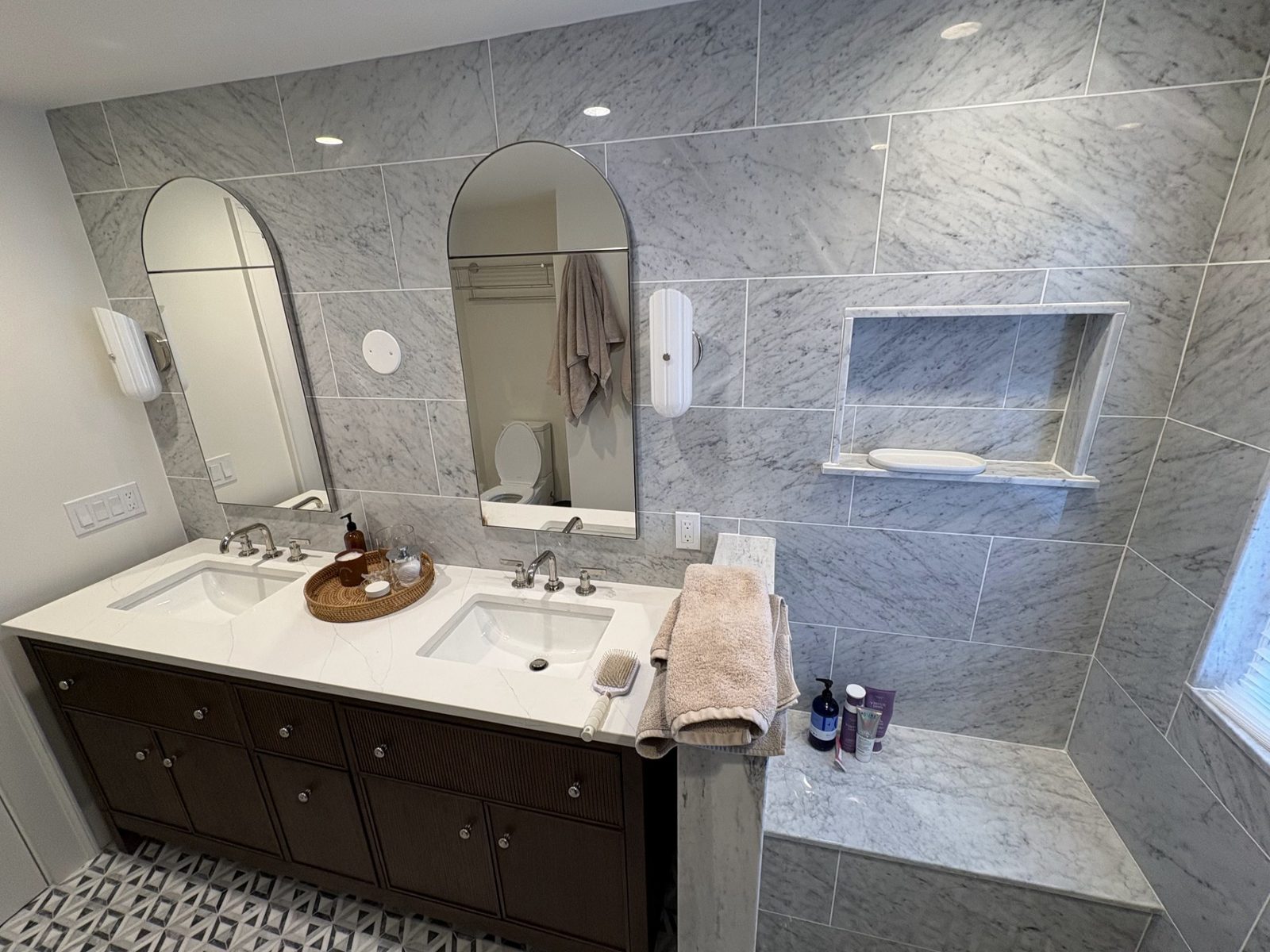
- Bathroom vanities and vanity tops, including changing from a pedestal to a vanity or the other way around.
- Pedestal and wall hung basins, which put the trap and supplies on display and need the rough in to be right, not merely functional.
- Laundry and utility sinks in basements, mudrooms and three decker back halls.
- Reconnecting a fixture after a countertop, a floor or a cabinet run is replaced by someone else.
Whatever the fixture, the install is the same four systems: mounting the fixture securely and level, connecting hot and cold at the stops, connecting the waste through a properly configured trap to the existing drain, and testing everything wet before the cabinet goes back together. The faucet usually goes on at the same time, which is covered on our faucet repair and replacement page, and many customers pair a sink change with a toilet replacement so the bathroom is opened up once rather than twice.
How We Plan the Job
We start with three measurements and one look inside the wall.
The existing waste height. Where does the drain stub come out of the wall, and how far is that from where the new sink’s tailpiece will land? That distance and the fall between them decides whether the existing arm can be reused, extended or has to be reworked. New vanities are frequently taller than the ones they replace, and taller vanities push the tailpiece down toward the waste opening, sometimes below it. That is the single most common surprise on a vanity swap, and it is why we look before we commit.
The trap configuration. A proper P-trap connects to a vented waste line. Older homes sometimes have an S-trap, a drum trap or a trap arm run too long, which can siphon the trap seal and allow drain odors into the room. Where we find it, we say so and explain what bringing it into line involves.
The supply positions and the stops. Are the stops in the wall or the floor, do they close, and will they line up with the new fixture’s shanks? A stop that will not seat becomes part of the job, and it is easier and cleaner to replace it while the cabinet is already empty.
The mounting surface. Undermount sinks need proper support and a compatible countertop material. Drop in sinks need a cutout that matches. Wall hung and pedestal basins need blocking in the wall, and in a plaster and lath wall that means knowing what is behind the finish before anything is hung.
What Is Different in an Older Quincy Two Family or a Dorchester Three Decker
Roughly one in eight Quincy housing units sits in a two unit building, and Dorchester is dominated by wood frame three deckers built between about 1880 and 1930. That stock brings specific conditions.
Cast iron waste stacks. In most of these buildings the kitchen and bathroom fixtures on all floors tie into a single cast iron stack. Cast iron holds up well and it is brittle where it is cut, so when a new connection or a new fitting is needed, the stack has to be supported above and below the work before anything is disturbed. Shielded no-hub couplings make a clean, code compliant transition between cast iron and modern pipe, and doing it properly is the difference between an install that lasts and one that leaks quietly for a year.
Galvanized supply lines. Where galvanized branches survive, they have scaled down internally and they corrode at the threads. We check the flow at the stop before we set a fixture, because a beautiful new sink fed by a tired branch will disappoint you on day one. If we find that, we tell you what section is the problem and how it relates to our leak repair and pipe work.
Old shut offs that will not seat. This is routine, not exceptional. We isolate the water further upstream and replace the stops as part of the work so the finished fixture can be shut off on its own.
Waste openings in plaster. A hundred year old wall does not have a neat drywall patch waiting behind the vanity. Where a waste opening has to be adjusted, we keep the opening as small as the work allows and tell you before we cut.
Tight access. Three decker bathrooms and galley kitchens leave little room to maneuver a cast iron sink or a vanity. We plan the path in and out, protect the floors and stairs, and take the old fixture away rather than leaving it in your hallway.
Stacked units and shared walls. When the risers feed three stacked bathrooms, turning water off for one install affects the neighbors. We find the valve that isolates the smallest area, and where only a building main will do, we schedule it with the owner or the property manager so everyone knows when the water goes off and when it comes back.
Condo association rules. Plenty of buildings around Quincy and Milton require notice before a riser is shut, restrict work to certain days, and want a certificate of insurance on file. Tell us your association’s requirements when you call (617) 549-5734 and we will work inside them.

What You Can Check First
- Measure the cabinet or the space the new fixture has to fit, including depth, and photograph the plumbing under the existing sink.
- Note the hole count and spacing on the new sink if you have already bought it, and whether the faucet is included.
- Try the shut offs gently. If they turn, good. If they resist, leave them.
- Empty the cabinet and clear a path to the room.
- If the existing sink also drains slowly, say so. That is a separate issue and it is better dealt with before a new fixture goes on, which is where kitchen sink drain clearing comes in.
- If your building is a condo, find out whether the association needs notice and an insurance certificate.
What the Visit Looks Like
We look at the existing rough in, the stops and the drain, and confirm the new fixture will land where it needs to. We explain what we found and what the work involves, including anything at the end of its life that is worth doing while the wall or cabinet is open. The price is agreed before work starts.
Then the install: old fixture out, connections checked, trap and arm set at the right fall to a vented waste, supplies connected, fixture mounted and leveled, sealant where it belongs. We fill the basin and let it go all at once so the drain is tested under load rather than with a trickle, run hot and cold at full flow, and check every joint dry with a hand and a light before the cabinet goes back together. In a multifamily we check the ceiling below as well.
Installing a fixture is permitted work under the Massachusetts plumbing rules, filed with the inspector in the city or town where the job is. A licensed master or journeyman plumber takes out the permit; a homeowner cannot. In Quincy that goes to the Plumbing and Gas Department on Hancock Street through the city’s ViewPoint online portal, and in Dorchester it is filed with the City of Boston. We pull the permit and schedule the inspection, and the inspection record is worth having when the property is sold.
Telling a Repair From a Replacement
Not every fixture complaint needs a new fixture.
Repair makes sense when the sink or basin is sound and the problem is at a connection: a leaking slip joint, a failed tailpiece washer, a loose mounting clip, a trap that has corroded through, a stop that weeps, or a faucet at the end of its life on a perfectly good sink. Cast iron enameled sinks and vitreous china basins in particular are worth keeping when the surface is intact; they routinely outlast the fittings attached to them several times over.
Replacement makes sense when the fixture itself has failed or no longer fits how the room is used: crazing or chips through the enamel that will keep staining, a cracked basin, a rusted-through stainless bowl at the drain opening, a vanity whose base has swollen from a long slow leak, or an undermount sink that has let go of the countertop. It also makes sense when the layout is changing, because moving a fixture is far cheaper in effort while the wall is already open than as a second visit later.
Where the honest answer is in between, we say so. Sometimes the right call is a new trap and stops on an old sink this year, with the sink itself replaced when the counter goes. That is the answer we will give you when it is the right one.
Fixture installation sits inside our plumbing repair and installation service. We work across Quincy, Milton, Dorchester and the neighboring towns. Call (617) 549-5734 and tell us what you are putting in.
Questions We Hear
Can You Install a Sink I Bought Online?
Yes. Bring us the model and, if you still have it, the spec sheet, and keep every part that came in the box including the mounting hardware and the strainer. Before the install we check the cutout or cabinet dimensions, the bowl depth against the existing waste height, and the faucet hole spacing. If something will not fit the space or the existing rough in, we tell you before the old sink comes out, while there is still time to exchange it.
Will My New Vanity Line up With the Old Drain?
Sometimes, and it is the first thing we check. Modern vanities are often taller than the ones they replace, which lowers the sink tailpiece toward or below the existing waste opening in the wall. Where there is still fall from the trap to the waste, the existing arm can be adapted. Where there is not, the waste opening has to be reworked, which means opening a small section of wall. We measure and tell you which of those you are looking at before the work is booked.
Do You Need to Open the Wall to Install a Pedestal Sink?
Often, yes, and it is worth doing properly. A pedestal basin hangs on the wall rather than sitting on a cabinet, so it needs solid blocking behind the finish to carry the weight, and in a plaster and lath wall that blocking is rarely already there. The supplies and waste also have to be positioned to sit neatly behind the pedestal, since everything is visible. We open the smallest section we can, install the blocking and set the rough in where it belongs.
Is a Permit Needed to Install a New Sink?
Yes. Under the Massachusetts plumbing rules, plumbing that is installed, altered, replaced or removed requires a permit before the work, and only a licensed master or journeyman plumber can take one out. It is filed with the local inspector: in Quincy through the Plumbing and Gas Department and the city’s online portal, and in Dorchester with the City of Boston. We handle the application and schedule the inspection, so you end up with a documented, inspected installation rather than an undocumented one.
How Long Is the Water Off for the Rest of the Building?
We keep it to the smallest area possible. The first thing we look for is a valve that isolates just your unit or just that branch, and in many two families there is one in the basement. Where the fixture stops work, we can often isolate at the fixture alone. Only when nothing else will do does the building main come into it, and in that case we agree the timing with the owner or property manager first so neighbors and tenants are told before the water goes off.
Can You Reuse My Existing Trap and Shut Offs?
We will if they are sound, and we will tell you plainly when they are not. Chrome tubular traps corrode from the inside, slip joint washers harden, and old multi turn stops frequently close most of the way and keep weeping. Putting a new fixture on tired connections is where a lot of small leaks begin. Since the cabinet is already empty and the water already off, replacing worn stops and trap parts during the install is the easiest it will ever be.