
Why the Piping Is Part of the Machine
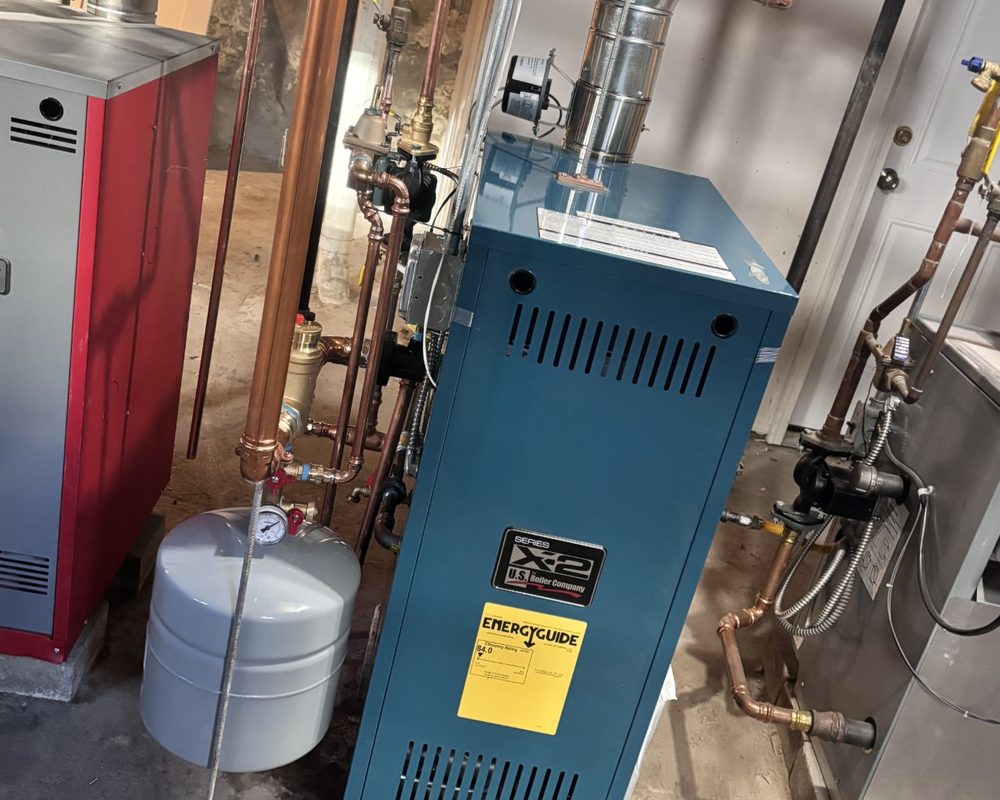
On a hot water system the pipes are a route. On a steam system the near boiler piping is functional equipment: its size, its height and its arrangement are what separate dry steam from steam carrying water.
Get it wrong and the boiler sends water up into the mains along with the steam. The system then bangs, heats unevenly, wastes fuel and never settles, and no amount of adjusting the thermostat touches it.
This is the single most common thing done badly on a steam replacement. A boiler swapped in by somebody treating it as a hot water job, with piping run the short way, produces a system that was worse after the new boiler than before it. When we replace a steam boiler the near boiler piping is done to what the boiler requires, not to what fits quickest.
Banging, and What It Is Telling You
Water hammer in a steam system is water sitting where steam wants to travel, and steam hitting it at speed.
Radiators that have lost their pitch. A steam radiator has to slope slightly back toward its supply pipe so condensate drains away. After a century of settling floors, refinished boards and radiators moved for decorating, a great many no longer do. Correcting the pitch often solves it outright.
Mains that are not draining. The same principle at building scale, and a more involved fix.
Wet steam from the near boiler piping, as above.
The noise is a symptom with a cause, not a characteristic of steam heat. A steam system in good order is quiet.
Venting Is How Steam Gets Anywhere
Steam can only enter a pipe or a radiator as the air ahead of it leaves. That makes the air vents the traffic control of the whole system.
A failed radiator vent leaves that radiator cold no matter how well the boiler runs, which is why a single cold radiator on steam is usually a vent rather than a boiler problem. Undersized or failed main vents leave whole sections of a building slow to heat, and fixing main venting is frequently the largest single improvement available on an old steam system, at a fraction of what equipment costs.
The radiator page covers the room by room version of this.

The Water Line, and Why It Matters More Here
A steam boiler has a water line it has to hold, and the parts that keep it there are the low water cutoff, the sight glass and, on many systems, an automatic feeder.
A low water cutoff is a safety device: it stops the boiler firing when the water drops too low, and a steam boiler run dry is a serious matter rather than an inconvenience. These need flushing on a schedule, because sediment is what stops them working, and a cutoff that has silently stopped functioning is the fault nobody sees.
A boiler swallowing water constantly is telling you the system is losing it somewhere, and that is worth chasing rather than topping up indefinitely.
Repair, and When It Genuinely Is the End
Most steam calls are not a dead boiler. They are venting, pitch, the water line or the controls, and those are parts and adjustments.
What ends a steam boiler is a failure in its own body: a cracked section, a leaking joint between sections, a block that has gone. Age alone does not, and plenty of steam boilers people were told to replace needed a vent and a flush.
When a replacement genuinely is right, two things decide whether you are happy with it: sizing and piping. Steam boilers are sized to the connected radiation, meaning the actual radiators in the building, rather than to a heat loss calculation or to the plate on the old unit. That is particular to steam and it is often got wrong. The boiler replacement page covers the general case, and the boiler repair page covers hot water systems.
Because we work both trades, the gas connection is ours rather than a separate contractor’s visit.
Multifamily and Commercial Buildings
Steam is common in exactly the buildings where several people depend on it. In a three decker one boiler often serves every unit, so a failure is everyone’s failure at once, and the heating season under the state sanitary code runs September 15 through May 31 with minimum temperatures a landlord must hold.
Older commercial and mixed use buildings around here run steam too, and there the question is usually as much about scheduling and access as about the equipment. The commercial heating and cooling page covers that.
The Dorchester page and the South Boston page describe the neighborhoods where this is the normal arrangement rather than the exception.
Permits and Licensed Work
Massachusetts requires a permit before this work is installed, altered, replaced or repaired, with limited exceptions, and only a licensed master or journeyman may apply. In Boston, replacing or installing a boiler needs a permit and only a contractor holding a valid Massachusetts trade license can apply for it. Our license numbers are on the licenses page.
Getting It Looked At
Call (617) 549-5734 or use the contact page. Saying that the system is steam, and whether it bangs, gets you a more useful answer on the first call. If the building is cold now, the no heat page is the more immediate read.
Questions We Hear
How Do I Know If I Have Steam or Hot Water Heat?
Look at a radiator. One pipe going to it usually means steam, and a small vent on the side of the radiator confirms it. Two pipes usually means hot water. A sight glass on the boiler, a glass tube showing a water level, is the other clear sign of steam, because a hot water boiler has no water line to watch.
What Is Water Hammer and Can It Be Cured?
Water sitting where steam wants to travel. Most often a radiator that has lost its slope back toward the supply pipe, which happens as floors settle and radiators get moved. It can also be mains that are not draining or wet steam from badly arranged near boiler piping. A steam system in good order is quiet, so the noise is a fault rather than a feature.
One Radiator Is Stone Cold and the Boiler Is Running Fine. Why?
Almost always the air vent on that radiator. Steam cannot enter until the air can get out, so a vent that has stopped venting leaves its radiator cold regardless of how well the boiler is working. It is a small part and an inexpensive fix, and it is very commonly misread as a failing boiler.
Half the Building Heats Before the Other Half. Can That Be Fixed?
Usually yes, and usually through venting rather than equipment. How fast air leaves the mains determines how fast steam reaches each part of the building, so improving main venting is often the biggest single gain available on an old system, and it costs a fraction of what people expect.
My Boiler Keeps Needing Water. Is That Normal?
No. A steam system that constantly needs topping up is losing water somewhere, and finding out where is worth doing rather than feeding it indefinitely. Running a steam boiler low is also a safety matter, which is what the low water cutoff exists to prevent, and that device needs flushing on a schedule to keep working.
Can I Just Put a Modern Boiler In?
You can replace a steam boiler, and it has to be done as a steam job. Sizing comes from the connected radiation in the building rather than from a heat loss figure or the old plate, and the near boiler piping has to be built to what the new boiler requires. Done as though it were a hot water swap, the result is a new boiler that performs worse than the old one.