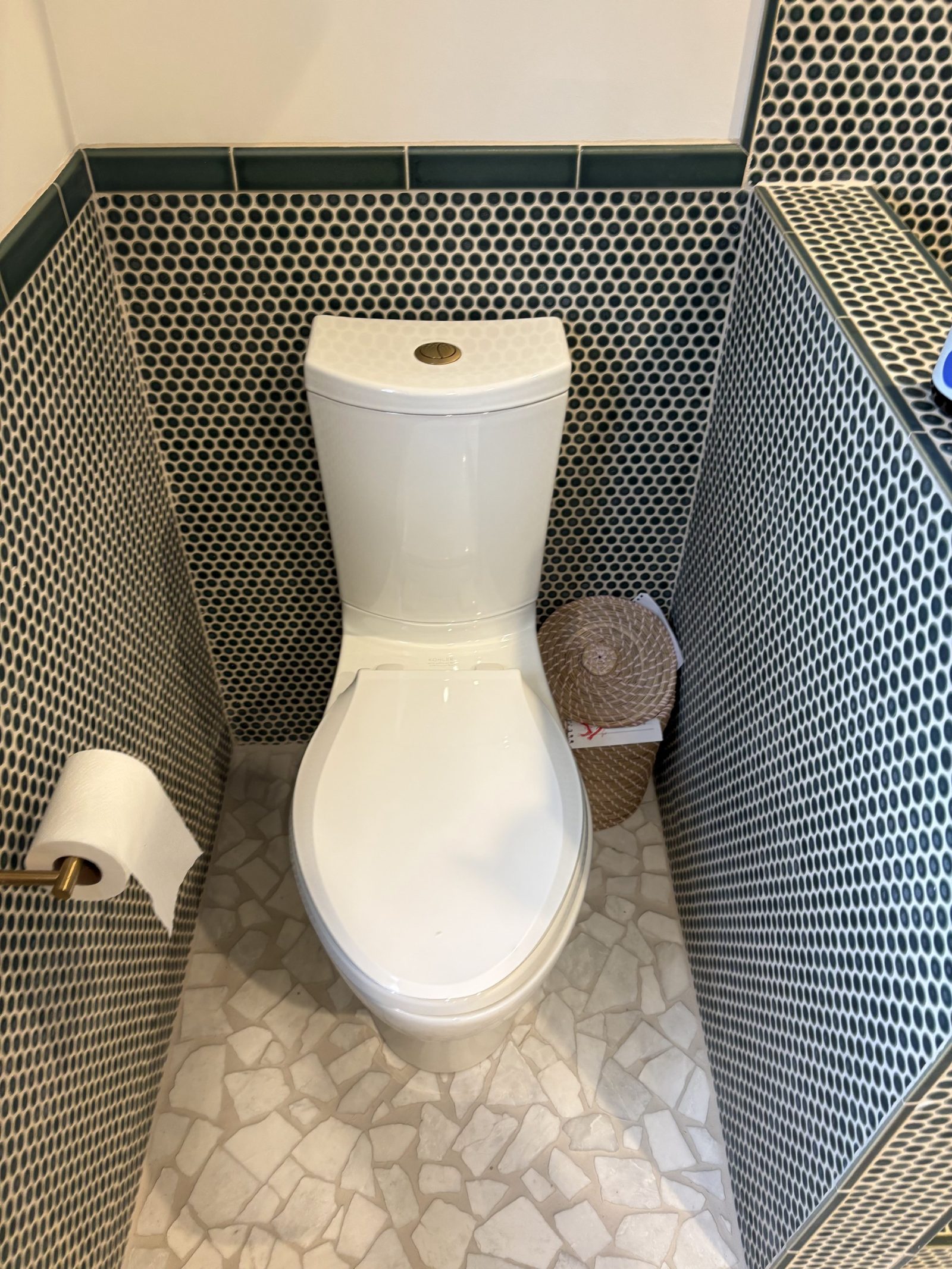
Tank Problems: The Running Toilet
A toilet that runs is losing water past one of two valves.
The flush valve is the opening at the bottom of the tank that the flapper or a canister seal closes. When the flapper hardens, warps or gets a mineral ridge on its seat, water creeps past it into the bowl. The tank level drops, the fill valve wakes up and tops it off, and you get the “phantom flush” every few minutes with no one in the room.
The fill valve is the tower that refills the tank. When its seal fails or its float is set too high, water runs continuously into the overflow tube and straight down the drain, usually with a steady hiss.
There is a quick test you can run yourself before we arrive: put a few drops of food coloring in the tank, wait twenty minutes without flushing, and look in the bowl. Color in the bowl means the flapper or flush valve seal is passing. No color, but water still running, points at the fill valve and the overflow. Either way, the fix is a part, not a new toilet.
Beyond those two, we look at the chain length and slack, the flush lever arm, the tank to bowl gasket and bolts, the float adjustment, the refill tube position, and whether the supply stop is weeping. In an older home we also check the supply riser and the shut off itself, which ties into our leak repair work when the stop will not close.
Bowl and Flange Problems: Rocking, Seeping and Staining
A bowl that rocks is not a cosmetic problem. Every rock breaks the wax seal a little more, and a broken wax seal lets water and waste escape under the bowl instead of going down the pipe. In a two family or a three decker, that is how a bathroom leak becomes a kitchen ceiling stain in the unit below.
What causes a rocking bowl in an old building:
- A rotted or broken flange. Older flanges were cast iron or brass, and the bolt slots rust through. Once the closet bolts have nothing solid to grip, the bowl moves.
- A flange below the finished floor. Every time a bathroom gets new tile, the floor comes up and the flange stays put. When the flange sits a half inch below the finish, a standard wax ring cannot bridge the gap reliably.
- A soft subfloor. Years of a small seep will soften the plywood or board under the bowl. Bolting the toilet tighter into soft wood makes it worse, not better.
- A lead bend or cast iron closet elbow. Plenty of pre-1940 Quincy and Dorchester bathrooms still have a lead bend wiped into a cast iron hub. It works, but it is soft, and it needs respect rather than force.
We check for movement by hand, look at the base for staining or a chalky ring, check the floor around the base for softness, and pull the bowl when the evidence points that way. Pulling a toilet is the only honest way to see the flange, and it is a normal part of the job rather than an escalation.
What Is Different in an Older Quincy or Dorchester Bathroom
Nearly half of Boston’s housing stock predates 1940, and Dorchester’s three deckers are a big part of that number. A few things follow from it.
Rough in measurements vary. The rough in is the distance from the finished wall to the center of the closet bolts, and while 12 inches is the modern standard, older homes turn up 10 inch and 14 inch rough ins regularly. We measure before we recommend a replacement model, because the wrong rough in means a bowl that will not sit against the wall or will not reach the flange.
Cast iron waste stacks. The toilet ties into a cast iron stack in most older two and three families. Cast iron is durable and it is also brittle at the cut edges, so if a flange has to be changed on a cast iron hub, the work involves supporting the pipe and using the right coupling rather than muscling it.
Tight access. A three decker bathroom is frequently under nine feet in one direction with the bowl close to a wall or a radiator. Getting a bowl out without hitting a pedestal sink or an old cast iron tub takes planning, not force.
Stacked units and shared walls. When a toilet leaks in a multifamily, the damage almost always shows up downstairs. That means access to two units, and it means being honest with both owners about what was found.
Condo association rules. Many buildings require notice before water is shut to a riser and want the contractor’s insurance on file. Let us know your association’s requirements when you call (617) 549-5734 and we will work to them.
Old shut offs. The supply stop behind the toilet is usually the oldest valve in the room. Where it has seized or passes water, we replace it as part of the job so you can isolate the fixture yourself in future.

What You Can Check First
- Run the food coloring test described above. It splits tank problems in half.
- Listen. A hiss is usually the fill valve; a trickle that stops and restarts is usually the flapper.
- Press gently on the seated bowl with both hands. Any rocking is worth telling us about.
- Look at the floor at the base for staining, a gap in the caulk, or a soft spot.
- Check the ceiling directly below the bathroom, especially in a two family.
- Clear the space around the toilet and note the toilet’s brand, which is normally stamped inside the tank lid or on the bowl behind the seat.
- If the bowl is overflowing right now, take the tank lid off and push the flapper down by hand to stop the water, then close the supply stop.
What the Visit Looks Like
We confirm the symptom, test the tank components, check the bowl for movement and the floor for damage, and look at the supply stop. We show you what is failing and explain the options, including anything nearby that is at the end of its life. The price is agreed with you before work begins. Then we make the repair or set the new toilet, and we test it: several full flushes, a check for movement, a check at the base and at the supply connection, and a look at the ceiling below in a multifamily.
On permits, Massachusetts draws a clean line. Repairing the working parts of a fixture, such as a flapper, a fill valve or a stop, is exempt from the permit requirement, and so is clearing a stoppage. Replacing the toilet is a fixture replacement, which is permitted work filed with the local inspector, in Quincy through the Plumbing and Gas Department on Hancock Street and its ViewPoint online portal, and in Dorchester with the City of Boston. We take out the permit and schedule the inspection.
Telling a Repair From a Replacement
Repair is the answer for nearly every tank complaint. Flappers, fill valves, flush valve seals, tank bolts and gaskets, supply lines and stops are all parts, and a good vitreous china toilet will outlive several sets of them. A wax ring and a properly repaired flange will also fix most rocking bowls without touching the fixture itself.
The replacement conversation makes sense when:
- The china is cracked. A hairline crack in a tank or bowl only grows, and there is no repair for it.
- The tank parts are no longer made. Some older one piece and low profile toilets use proprietary flush valves that cannot be sourced, so a leak in the tank means the tank.
- The bowl will not stay put even with a sound flange, usually because the china at the bolt holes is chipped or the horn is damaged.
- It clogs constantly and the drain is clear. A toilet with a narrow or partially blocked internal trapway will keep clogging no matter how many times the branch line is cleared. Once the drain side has been checked under our drain clearing work and found to run freely, the fixture is the remaining suspect.
- You are changing the bathroom anyway. If a vanity or sink is going in at the same time, doing the toilet in the same visit avoids opening the same floor twice, and it pairs naturally with our sink and fixture installation.
Toilet work sits inside our wider plumbing repair and installation service, alongside faucet repair and replacement. We cover Quincy, Dorchester, Milton and the towns around them. Call (617) 549-5734 and describe what the toilet is doing.
Questions We Hear
Why Does My Toilet Run Every Few Minutes?
That pattern is almost always the flapper or the flush valve seal. Water creeps past it into the bowl, the tank level drops, and the fill valve starts to top the tank back up. Drop some food coloring in the tank and wait twenty minutes without flushing; if color shows up in the bowl, that confirms it. The repair is a new flapper or seal, plus cleaning or replacing the seat it closes against. If no color appears but water still runs, the fill valve is the part to look at instead.
Is a Rocking Toilet Serious?
It is worth acting on. Each movement works the wax seal loose, and once that seal is broken, water and waste escape under the bowl instead of going down the pipe. In a Quincy two family or a Dorchester three decker, that shows up as a stain on the ceiling of the unit below, often weeks later. We pull the bowl, look at the flange and the subfloor, repair or replace what has failed, set a new seal and re-bed the toilet so it sits solid.
Do You Need a Permit to Replace a Toilet?
Yes. Repairing the working parts inside a toilet is exempt from the permit requirement under the Massachusetts plumbing rules, but replacing the fixture itself is permitted work. The permit is taken out by a licensed plumber and filed with the inspector in the city or town where the work happens. In Quincy that goes through the Plumbing and Gas Department on Hancock Street and the city’s online permitting portal, and in Dorchester it is filed with the City of Boston. We handle the application and the inspection as part of the job.
Can You Replace a Toilet in an Old House With a Different Rough In?
Yes, and we measure first. The rough in is the distance from the finished wall to the center of the closet bolts. Older Quincy and Dorchester bathrooms turn up 10 inch and 14 inch rough ins alongside the modern 12 inch standard. Models are made for each, so in most cases the answer is simply selecting the right bowl. Where the flange itself has to move, we tell you that up front, because it changes the scope of the work and the permit that goes with it.
My Toilet Clogs Constantly. Is Replacing It the Answer?
Sometimes, but we check the drain first. A branch line that has narrowed will cause repeat clogs at a perfectly good toilet, and clearing that line solves it. If the drain runs freely after clearing and the same toilet keeps blocking, the suspect becomes the fixture’s own internal trapway, which on some older low volume models is narrow or partially obstructed. At that point replacing the toilet is the fix that lasts, and we will explain exactly what led us there.
What Should I Do Right Now if the Bowl Is Overflowing?
Take the tank lid off and push the flapper down with your hand, which stops more water entering the bowl immediately. Then close the supply stop behind the toilet, turning it clockwise. If the stop will not close, shut the water at the branch valve or the main. Do not keep flushing to test it. Mop up what you can, keep the bathroom door shut if there are pets or small children, and call (617) 549-5734 to tell us what happened and what the bowl is doing now.